🙈 Blind Monkey — BOMBANANA! Role Guide
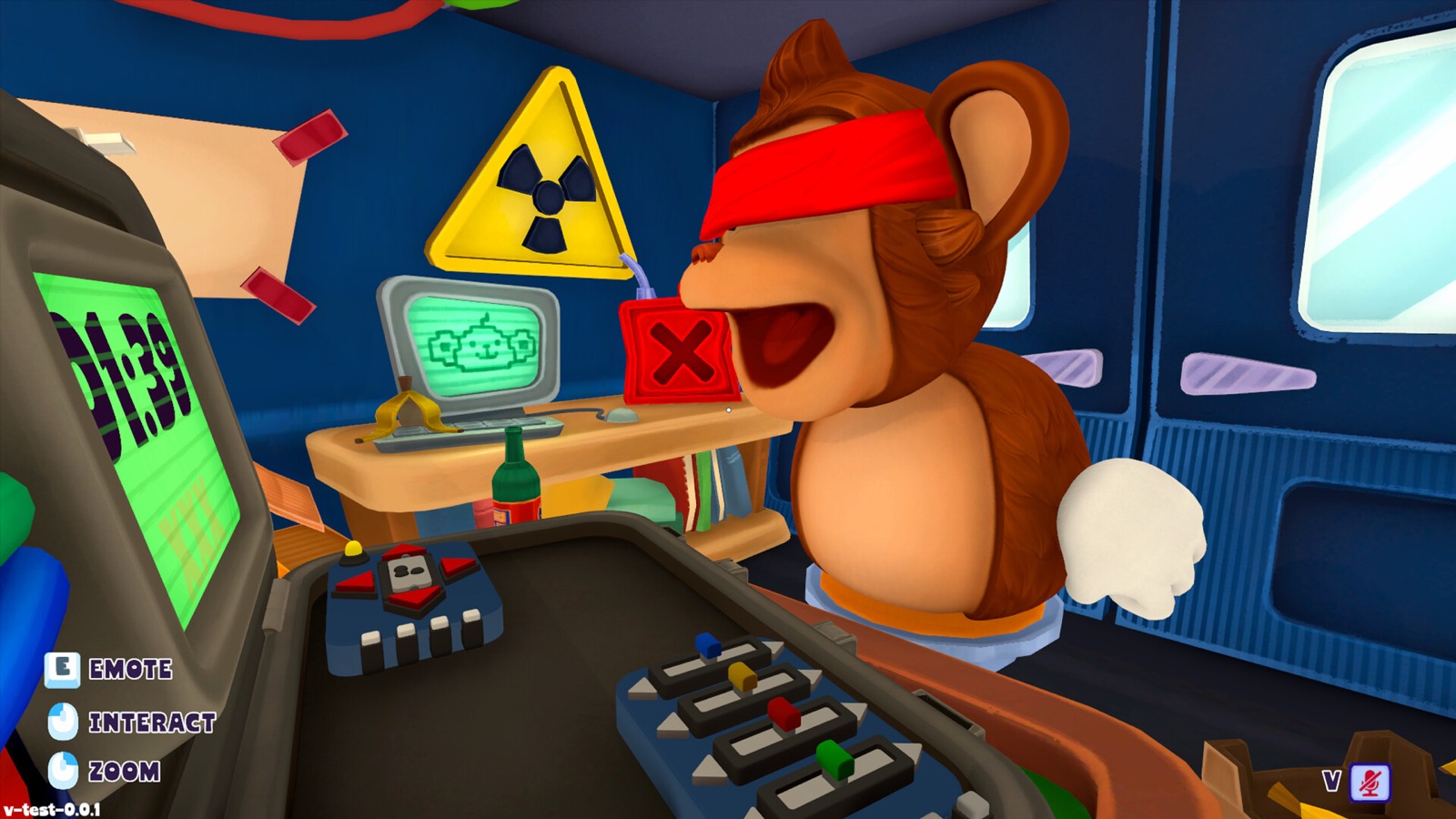
Can't see the bomb, but is the only one who can physically touch it. Marked by the red blindfold, Blind Monkey is the role players either love or find genuinely stressful — you're the one with your hands physically on the bomb, and you're doing it with zero visual information of your own. Here's what the role actually involves and how to not be the reason a bomb goes off.
The sensory limitation
Blind Monkey cannot see the bomb, the manual, or the van at all. What you get instead is full hearing and full speech — you can ask questions, push back on a confusing instruction, and hear everything your teammates say. That's the trade the role makes: you have the most direct power over the outcome, since you're the only one who can touch the bomb, but you have the least raw information about what you're touching. Every action you take is an act of trust in whatever your team just told you.
Relying on your teammates
Since you can't verify anything visually, your entire job is translating spoken instructions into precise physical action — nothing more, nothing less. Resist the urge to fill in gaps with guesses; if a callout was vague ("the switch on the left"), ask which left, rather than picking one and hoping. The callout guide covers a repeat-back-and-confirm structure that exists specifically to protect you from acting on a half-formed instruction — use it, especially early on.
Practical tips
- Narrate what you're touching. Say what your hand is on before you act, not after — it gives your team one last chance to catch a mismatch before it's too late.
- Don't move ahead of instructions. It's tempting to start feeling around for the next module while your team is still mid-callout on the current one. Stay put until you have a specific target.
- Ask for repeats without hesitation. A clarifying question costs a few seconds; acting on a guess can cost the whole bomb.
- Keep your own count. If a module involves a sequence (press three times, flip in order), track it yourself out loud — your teammates are watching the bomb, not your hands.
Common mistakes
The most common Blind Monkey mistake is acting on partial information because waiting feels slower than guessing — it almost never actually is, once you factor in the cost of undoing a wrong input. A close second is going quiet: because you can't see anything, it's easy to just wait passively for instructions instead of actively narrating your actions and asking questions, which leaves your teammates guessing whether you understood at all. Stay verbal, stay patient, and trust the callout process over your own instinct to move faster.
For the full picture of how your role fits with the other two, see the roles overview, which compares what all three monkeys can see, hear, speak, and touch.
Why Blind Monkey suits certain players
Some players find Blind Monkey the most relaxing of the three roles, in a strange way — there's nothing to visually track, no manual to flip through, no gestures to interpret. Your job is narrow: listen carefully, act precisely, and speak up when something's unclear. If you prefer a role with a tight, well-defined job over one juggling multiple information streams, this is usually the seat to pick first. Players who find it stressful tend to be the ones fighting the instinct to act on incomplete information — if that's you, leaning harder into the callout guide's confirm step specifically will help more than almost anything else.
It also pairs oddly well with a calm Mute Monkey or Deaf Monkey directing you — the role rewards a team that has already settled into a steady callout rhythm, since Blind Monkey has no independent way to break out of a bad exchange except asking for it to slow down.